How Much Does Web Design Cost For B2B & SaaS?
Discover how much web design costs in the UK for B2B. Learn key factors affecting your budget. Plan smart and ensure a dazzling website.

Found yourself wondering how much a B2B web design project is going to set you back – or more specifically, how much does web design cost if you’re a SaaS or tech company?
Well, there are loads of factors that come into play, and a couple of them that can make a big difference are the complexity of your website and where you're based - for example, does it matter if you're in the UK? Yep, it can, because website design costs in the UK can differ from other regions.
Whether you're a startup looking to keep upfront costs down with some DIY tools or a bigger business looking for a world-class new site from some top-notch website designers, navigating the world of web design can be a bit of a minefield. You want to know about the website costs you can see, but also the ones that aren't so obvious – like ongoing expenses and maintenance costs.
Stick with us as we take a closer look at all this, including the average costs and the key things to consider when it comes to SaaS website design and website development.
Get a free webpage hero design
SaaS web design: So, what affects the cost of your site?
So, let's break down what web design costs cover, shall we? This is the total investment you'll need to make to get a site up and running, including the initial design and build, development, and all the ongoing maintenance and updates you'll need to do afterwards. And here are the key factors that influence these costs:
- How complex do you want your site to be? A simple basic website or brochure-style site is going to cost less than a fancy e-commerce platform with lots of customisation required. And making sure your site looks good on all devices, while keeping up with the latest website design trends, is all part of the package.
- What tools and platforms are you going to use? Will you be using some kind of DIY website builder or getting a team of pros in? This is going to have a big impact on the final design cost, especially if you're looking to build something really advanced, like with Webflow or other content management systems.
- How much are you going to need to spend on maintenance and updates? There's more to a website than just getting it built, you know - you'll need to keep it up to date, pay for hosting, and all the rest, which is where ongoing costs and ongoing maintenance come in.
- Where are you based? Costs can vary a lot depending on where you are in the world. Web design in the US, for example, can be pretty pricey compared to the UK, which is why we often see US companies opting for overseas design services.
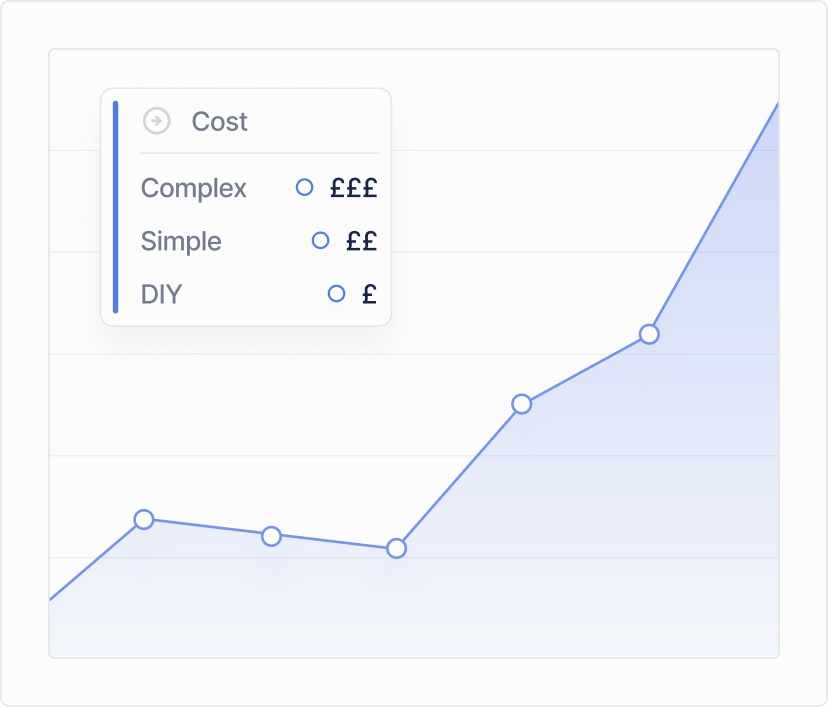
A lot of people wonder how much a website is going to cost them, and the truth is it's all about basics versus complex. Basic sites usually have fewer pages and not so many features, whereas complex websites are the opposite - think e-commerce, booking systems, that sort of thing.
Getting your head around the cost of all these different features is a big part of budgeting. And when it comes to the technical nitty-gritty, like booking systems, payment gateways or dedicated servers, you want to make sure you're talking to someone who knows their stuff – a web designer or website developer who understands B2B and SaaS.
Average B2B web design costs by region
When it comes to web design in the UK, there are a few things to bear in mind - the cost is going to be higher than in some other regions, for example. Here's a rough guide to get you started:
Living and working in London or another big city can drive up costs, especially when it comes to something like web design, which is why our remote-first approach allows you to get the best teams for the best costs.
At Overpass Studio, we’re a UK-based studio that makes use of Webflow-first, component-based builds to help keep development costs down while still achieving some amazing results for a new website or redesign.
Book a Webflow demo call
Web design pricing models by approach
DIY website builders: Recommended for very early stage founders
DIY website builders like WordPress and Wix can work well for very early stage founders to try and put something together and manage internally until you get to a revenue of $1M+ or receive funding.
Use templates and Framer or Webflow to simply get something out. You will replace this and build a stronger foundation in the future when the time is right.
For a B2B SaaS company, you may need a more sophisticated solution than a basic website builder tool, especially as your website type becomes more complex.
If you’re currently on a very limited budget but still want professional input, you can also try looking for professional agencies that offer a free redesign challenge to get a cost-free and obligation-free taste of what a design agency can do for you before you commit.
Get a free webpage hero design
Professional web design services: More cost-effective long-term and higher ROI in the right stage of growth
Working with a team of professional SaaS web designers is the best way to get a site that's going to do exactly what you need it to. Here are some benefits:
- You get what you want: Customisation options are endless, and you can be sure your site is going to look and feel just the way you want it to.
- Integrated solutions: End-to-end solutions cover everything from strategy to ongoing support, with a focus on speed and efficiency.
- Flexibility and control: With a bespoke site, you have complete control over the direction your business takes, and a professional website design makes it easier to support more pages and new features over time.
- Future costs: Less fixes needed from DIY tools.
Remember: all new customers, team members, partners, press and investors judge the quality of your product and services by the frame that surrounds it (brand and website). Because of this, investing in your frame is vital to being perceived as a high quality company and attracting high value clients and team members. So, yes, it is an investment, but a vital one.
Comparing website costs by features
The overall scale and distinct features of the site you want to create will affect the costs of your project drastically, as some websites are 5 pages where others are 100+. Additionally, if strategy, copy, visual content and animation are included, then costs are likely to be much higher. The services of work and scale of the site is what really impacts pricing.
Also, the ambition you have for your site matters. If you want a truly world class website which will create PR and interest, you need to invest heavily in it. If you want a website that just gets the job done, then you can afford to invest less time.
When comparing website costs and feature costs, you might look at factors like:
- Design template: You can pick a pre-designed template to get started, but expect to pay at least £200-£500 for the basics in our experience.
- Design template customisation: If you need to make some changes, you'll need to factor this into your website design cost.
- Add-ons and integrations: Every new feature or integration you add is going to drive up the cost, especially if it changes the website type or adds e-commerce functionality.
- Ongoing maintenance and updates: You'll need to budget for these too. Web hosting: Typically pretty cheap and often bundled in with other services (£5-£20 a month), but we recommend Webflow vs other tools for the most cost-effective hosting and build services.
Basic sites work well for businesses that just need to push out content without getting too complicated, which makes them a pretty affordable option for small businesses on a tight budget. Basic tools online make it easy to get started and look great with a modern design aesthetic.
Cost implications of e-commerce website features
Building an ecommerce website means lugging around a load of extra features that end up costing a lot more than a basic website. This means more money upfront to get developers to sort it out. Some of the key features include:
- Payment gateways: Like integrating with Stripe or PayPal.
- SSL certification: This one is a must for ecommerce websites, it keeps all your transactions and personal details safe.
- Inventory management: This one needs a pretty complex database to keep track of all your products.
Ecommerce platforms need a robust bit of architecture and all these features just add to the cost of setting up and maintaining it. Developers are going to focus on getting these right, so it looks up to date with current website design trends and meets the right website security standards.
Hidden costs in web design projects
It’s important to note that you should not see a website as a one off investment. If your company and product changes or evolves monthly, then your website needs to reflect who you are today, not who you were yesterday.
You should have the mindset of investing monthly into your website and treating it like a marketing product. Making improvements, updates and monitoring performance constantly.
The hidden cost is people not understanding this mindset shift from the start. As the initial build or redesign is just the start of truly optimising your website.
Additional costs to factor for in the ongoing web design process may include:
- Hosting costs: Your provider might charge anywhere from £5 to £100 a month, depending on the level of website hosting and whether you’re using a dedicated server.
- Regular maintenance: You'll need to budget for updates, backups, and any tech support you need to keep the place running. Quality assurance is key to making sure you're meeting the right standards.
- Domain renewal: Don't forget the annual domain renewal fees - they can impact both the price and your SEO, and will vary depending on the domain extension.
- Security enhancements: You might need to get some extra plugins or services to keep things secure, and then of course there's frequent SSL certificate updates.
- Custom feature updates: As your site grows, you might need new features or a redesign which can be costly in terms of tech specs and project management.
Failing to budget for ongoing costs can lead to a nasty surprise that can hurt your project's bottom line. Awareness and proactive planning help you avoid these kinds of surprises altogether. Getting professionals to manage your site from start to finish means they'll keep you in the loop throughout the whole design process and help you keep accurate costs under control.
Website refresh vs website redesign costs
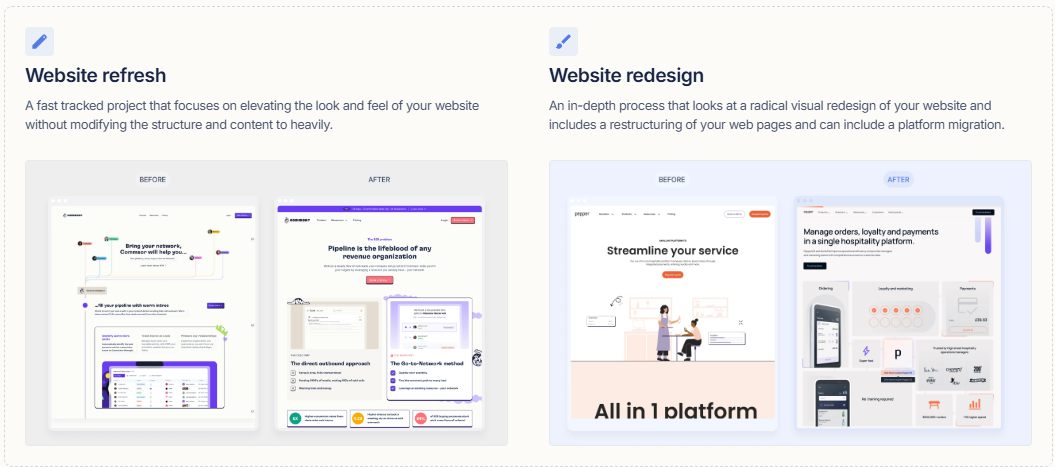
Not every project needs a full rebuild - sometimes a refresh is all you need to get the impact you're looking for, without breaking the bank. Knowing the difference helps you make the right choice, and quality assurance is key in figuring out whether you actually need to update the whole thing, and how much it's going to cost.
Website refresh: A cost-effective way to improve
A website refresh updates the look and messaging, and reorganises the structure - without changing the underlying framework or CMS. Refreshing a website is about 2X faster and does not alienate existing assets such as social content or sales decks, also making it a lot cheaper than redesigning from the ground up.
Businesses might choose to do this when:
- The design is looking a bit dated and needs a modern touch.
- The brand has evolved and needs its content or imagery to catch up.
- You just need a few tweaks to the user experience or some minor CMS improvements to keep things ticking over.
Typical cost range: £10,000 - £20,000, depending on how much you're looking to change and how many more pages you need to update. A refresh is pretty quick to deliver and keeps most of your existing assets, making it ideal for B2B companies that just need to give their website a bit of a spruce up without breaking the bank.
Website redesign: A deeper overhaul for a higher ROI
A full redesign reworks the design and functionality from the ground up and might involve moving to a new platform like Webflow while also rethinking how users interact with your site. This is a good idea if you're looking to rebrand, or improve performance and integrate new tools, though it may be more expensive.
Typical cost range: £20,000 - £100,000+, based on the complexity, functionality and integrations. Redesigns offer a way to build scalable systems that can support growing marketing and digital strategies, especially for SaaS and AI powered websites that need to evolve quickly.
Learn more about Overpass Studio's approach to building flexible, Webflow-first builds, and check our Website Design Services page for more details and real-world examples of web design trends.
Summary and key takeaways
The key point to remember here is that your website is an investment opportunity, not just another cost.
Investing in a well designed website gives an ROI so you create revenue in the long run by investing properly in your website. If you don't invest enough and try to cut corners, you probably won't get the results you are looking for and you won't see a return on investment. But, if you invest smartly, and with the right partner, you can see a big return.
Here’s a quick summary of the points we’ve covered in this article:
- Factors influencing costs: Design complexity, customization, maintenance needs and regional pricing all come into play, and several key factors will determine your final website design cost.
- Regional variations: Web design costs vary widely and are higher in the US, so the design cost in the UK typically costs less than in some other markets.
- DIY vs professional options: DIY website builders can save you money and are easy to use, while professionals can give you a comprehensive, bespoke solution that will grow with you.
- Ecommerce vs basic sites: Ecommerce incurs higher initial and maintenance costs due to features like payment systems and security requirements, so e-commerce websites will always carry higher development costs.
- Hidden and ongoing costs: Regular hosting and maintenance are vital, and then there are costs like domain renewals, SSL certificate renewals and security upgrades that can catch you off guard.
Taking charge of these factors is what's needed - and that means having a plan & some foresight when you’re asking “how much does it cost” or “how much does a website really cost in the UK?”.
How Overpass Studio can help
You need to line your digital presence up with what your business is trying to achieve, and that means taking an approach to SaaS web design that really nails your brand online and supports your wider search engine and social media accounts strategy. That’s where we step in.
We can help you figure out:
- What type of business website you actually need – from a simple small business website or brochure site through to a conversion-focused ecommerce website or SaaS marketing site.
- What type of service you require, from a little spring refresh to your current website, to a full redesign or brand new site.
- How you’ll handle ongoing costs or support with web hosting, website maintenance, and ongoing support – from hosting costs and a monthly maintenance fee through to technical support and website security.
Once you’ve nailed down your website type, your site's complexity and the level of design cost you’re comfortable with, you can start to compare accurate costs for the same project across different web design companies.
From there, it’s much easier to choose the right partner, manage the associated costs, and build a new site or refresh your own existing website in a way that feels cost effective – both now and as you grow.
Book a Webflow demo call
Get in touch